
Last updated November 22, 2026
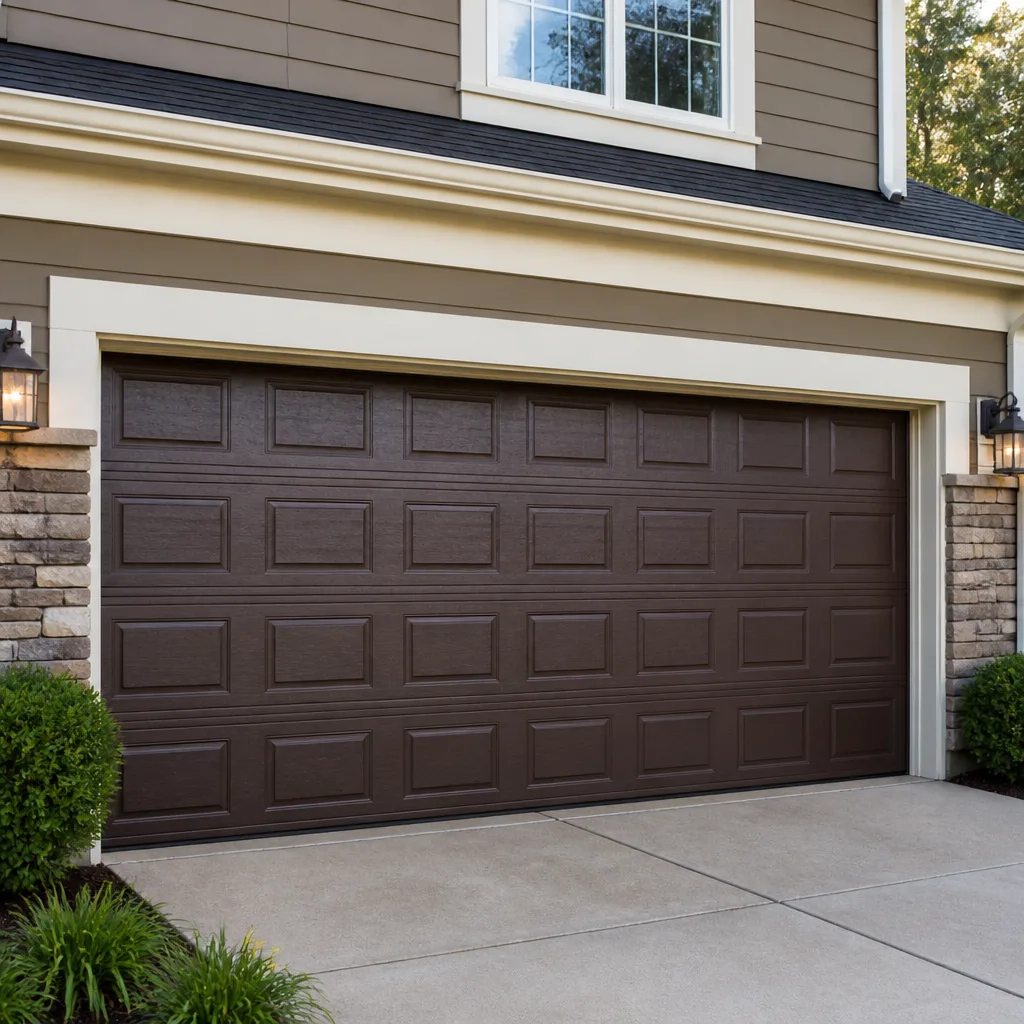 Raised-panel steel
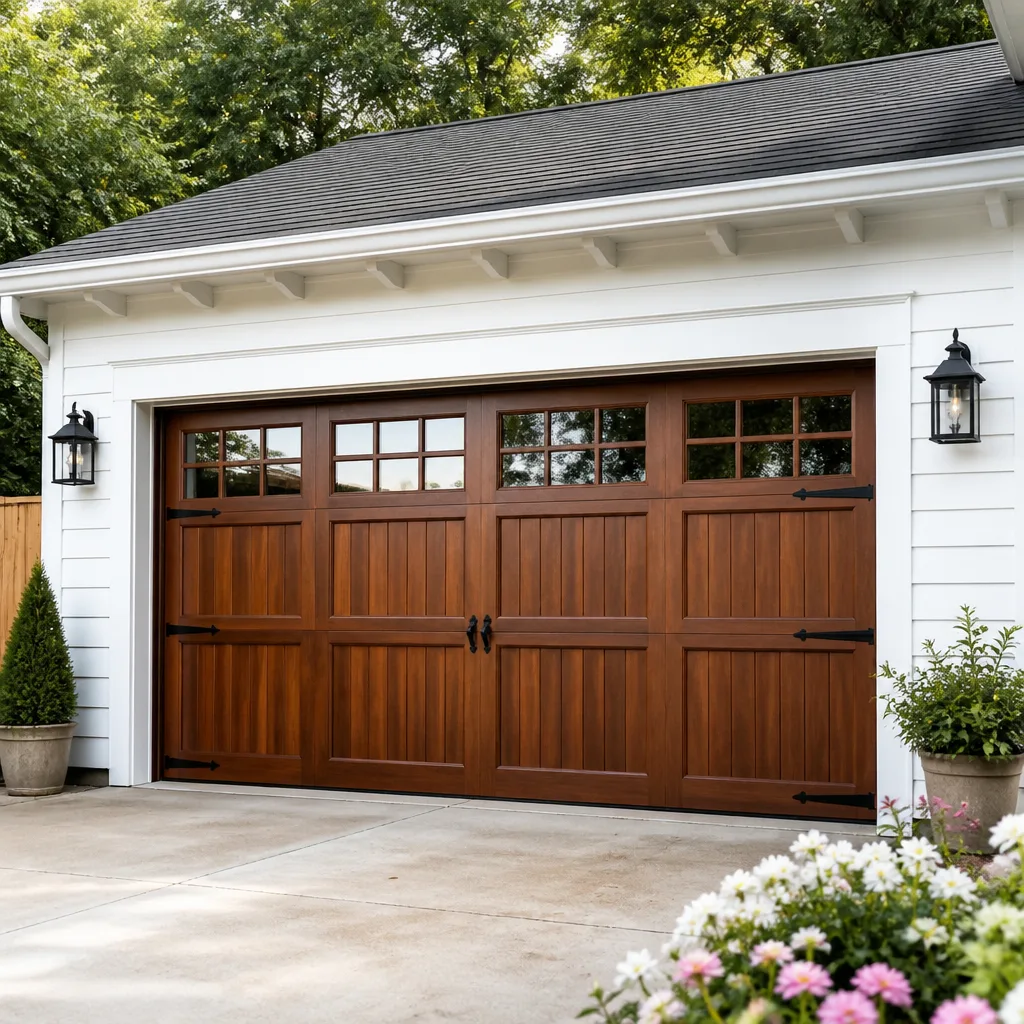 Carriage house
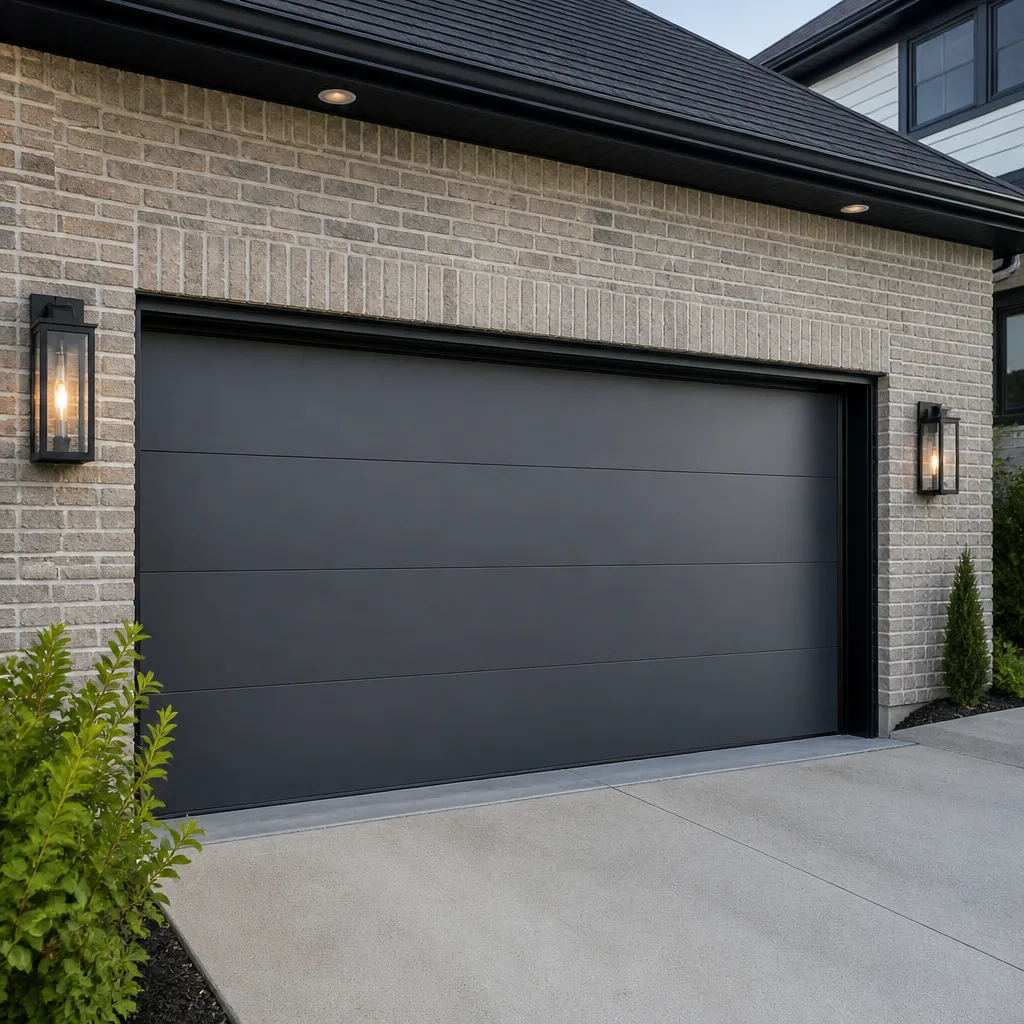 Modern flush
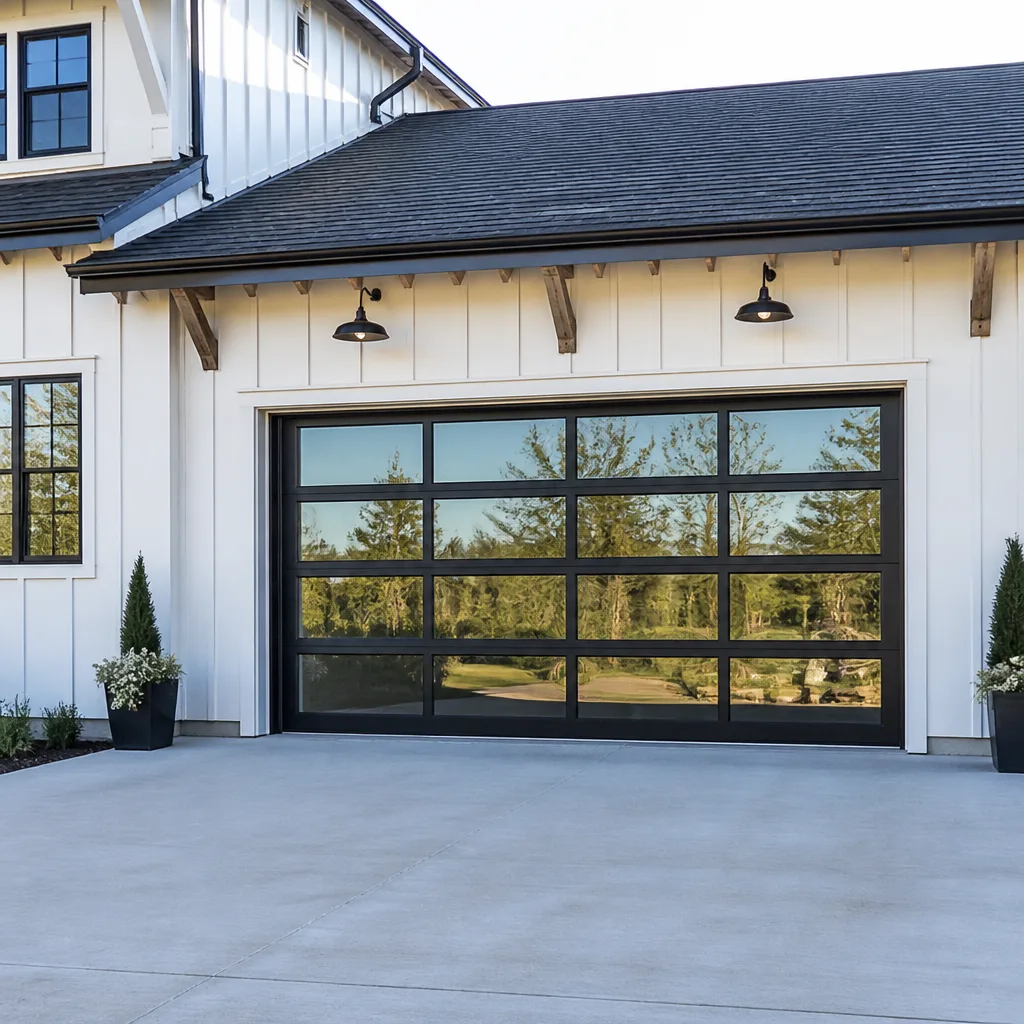 Full-view glass
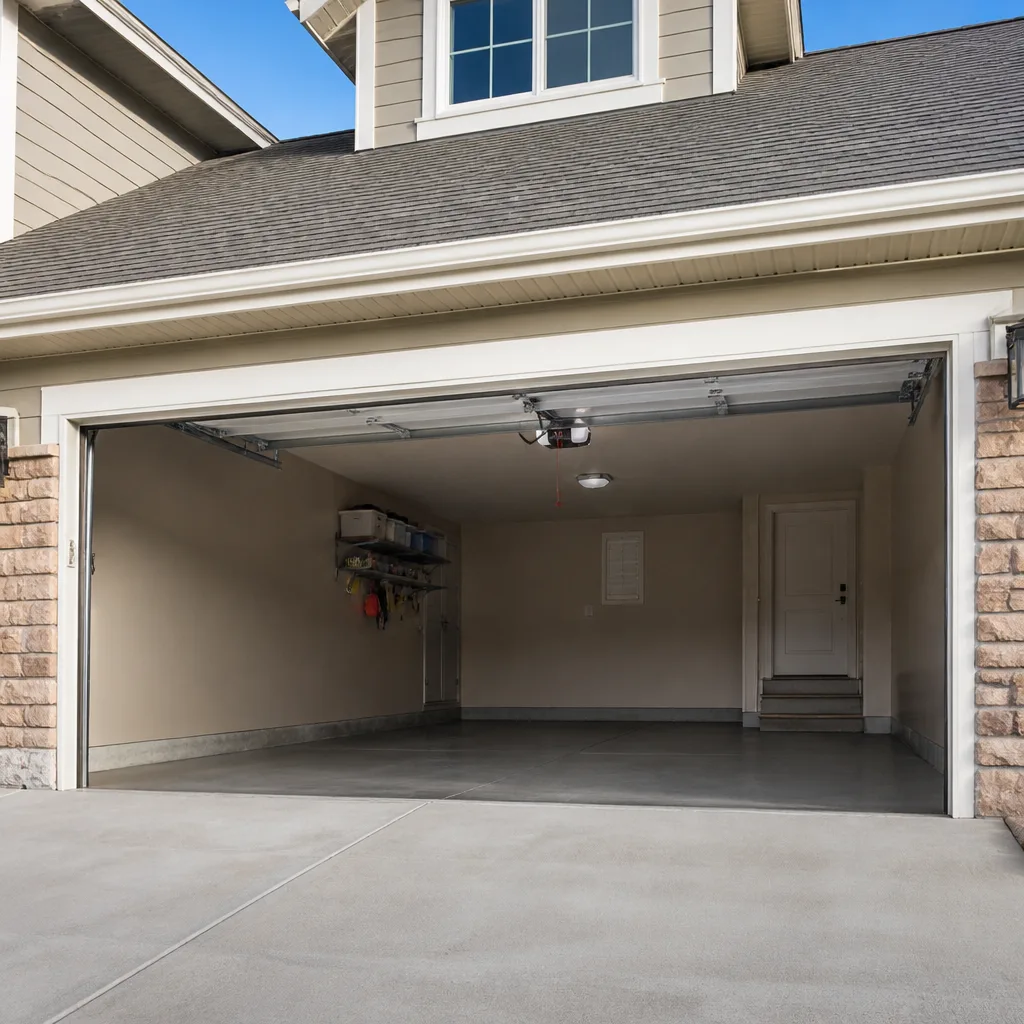 LiftMaster openers
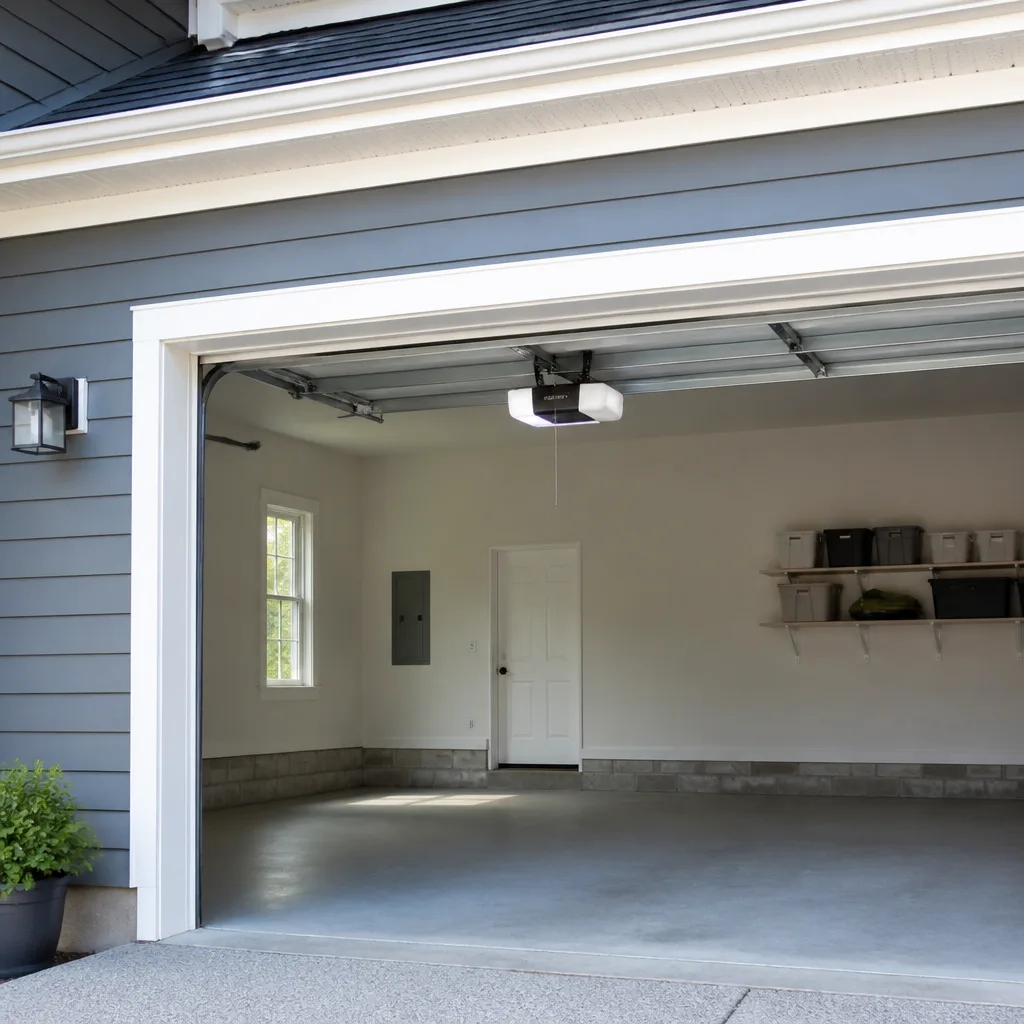 Chamberlain openers
Full 25-point door and opener safety check with every visit - springs, cables, rollers, tracks, and your LiftMaster or Chamberlain opener included
You get a price before we start. It does not change when the pro arrives.
Get your free estimateDIY vs Professional Garage Door: The Lynn Homeowner’s Decision Guide
Most advice about garage door repairs frames the choice as a skill test: are you handy enough to fix it yourself? That’s the wrong question. The real question is which specific jobs carry injury risk, which carry liability, and which are genuinely within reach for a prepared homeowner with the right tools. A torsion spring under tension stores enough energy to break a wrist or worse, and the winding bars and technique required to release it safely aren’t in any standard home toolkit. This guide breaks the work down task by task so you know exactly where DIY makes sense in Lynn and where it doesn’t. Mention Lynn once.
Quick Answer
Cosmetic and low-tension jobs – lubricating hinges, replacing rollers, adjusting photo-eye sensors, and swapping a remote battery – are reasonable DIY projects for a careful homeowner. Anything involving torsion springs, cables, bottom brackets, or the structural tracks and panels should go to a trained garage door technician, because those components store dangerous energy and a mistake can void your door’s warranty or require a pro to undo the error first. In Lynn, the smart approach is DIY for maintenance and pro for the high-risk mechanical work.
Styles & brands we work with
- Raised-panel steel
- Carriage house
- Modern flush
- Full-view glass
- LiftMaster openers
- Chamberlain openers
Table of Contents
- What garage door work is actually safe to DIY?
- The task-by-task DIY vs. professional matrix
- When does Massachusetts require a licensed contractor?
- The real cost of a DIY mistake
- What “DIY-ready” actually requires
- Which Lynn-area store brands are worth installing yourself
- How one professional inspection extends DIY maintenance
- Opener work: why brand matters more than you think
What garage door work is actually safe to DIY?
The honest answer is that the safe list is smaller than most homeowner guides suggest, and the dangerous list is bigger. A garage door is a balance of tension and weight, and every component you touch affects that balance. The tasks below involve no stored spring energy and no lifting of the door under tension, which is what makes them reasonable for a homeowner. For anything mechanical that controls door travel, it’s worth having a trained technician handle it.
Here’s what we consider genuinely safe for a prepared homeowner in Lynn:
- Lubricating hinges, rollers, and tracks with a garage-door-specific lubricant, not WD-40 or cooking oil.
- Replacing a remote battery or reprogramming a remote to an existing opener.
- Cleaning and aligning the safety photo-eye sensors at the bottom of each track – the most common cause of a door that reverses immediately after closing.
- Wiping down and lightly painting or staining a steel or wood door to slow weather wear.
- Replacing worn weatherstripping on the bottom seal, which keeps leaves and small pests out of an attached Lynn garage.
- Testing the safety reverse by placing a small object in the door’s path – a monthly check every homeowner should do.
If a task appears above, you can handle it with basic tools. If it involves springs, cables, tracks, or the door panel itself, read on before you pick up a wrench.
The task-by-task DIY vs. professional matrix
Below is how we sort garage door jobs in Lynn. The right-hand column isn’t a knock on your ability – it’s about what happens when a spring or cable releases unexpectedly. Every task marked “pro” involves stored energy or lifting tension that can seriously injure a person who isn’t standing in the safest position with the right tool.
- Roller replacement – DIY-friendly for top rollers, pro for bottom rollers. Top rollers unbolt easily. Bottom rollers sit under cable tension and should not be touched.
- Hinge replacement – DIY-friendly. With the door fully closed and no spring load on the hinge, a like-for-like swap is straightforward.
- Weather seal replacement – DIY-friendly. The bottom seal slides in a channel and pulls out by hand.
- Panel dent or crack – pro. Replacing a single panel requires unhooking the door from the opener and releasing spring tension first.
- Track realignment or replacement – pro. Bending a track back by hand can permanently deform the door’s travel path.
- Spring repair or replacement (torsion or extension) – pro. This is the highest-risk job in the trade and requires a winding bar and specific technique.
- Cable replacement – pro. Cables are under tension from the spring system and can snap back at lethal speed.
- Opener replacement – pro, unless the model is a straight swap on identical mounting. Even then, wiring and force-calibration are best handled by a technician.
- Full door replacement – pro. This is a two-person, structural job with permit considerations.
When does Massachusetts require a licensed contractor?
This is where a lot of DIY guides go quiet. Massachusetts does regulate home improvement work, and the line matters for a Lynn homeowner deciding whether to swing the hammer or call someone. In general terms, any work that requires a building permit or that involves structural changes to a home – including full garage door replacement and the framing around an opening – is contractor territory, and a licensed home improvement contractor is the person who can pull the permit and stand behind the work. You should confirm the exact rules with the City of Lynn’s building department before any structural job.
What this means for practical decisions:
- Replacing a full door or reframing the opening may require a permit and should involve a licensed contractor.
- Swapping an opener on existing wiring is closer to a like-for-like replacement than a new electrical install, but if the openers run on 120-volt line voltage at the ceiling outlet, it still warrants a technician.
- Any structural track or header work crosses the line every time.
- Spring, roller, hinge, and seal maintenance does not trigger permit rules – but the safety rule still applies, and springs remain pro-only.
The bottom line for Lynn: if a job involves the structure of the house or the electrical supply, ask the city and use a licensed contractor. If it’s maintenance, you can do it.
The real cost of a DIY mistake
A DIY mistake on a garage door rarely shows up as a single clean charge. It usually shows up as two: the cost to undo the error and the cost to do the job right. A homeowner who replaces a torsion spring without the right winding bar often ends up with a bound door, a bent track, or a snapped cable – and the technician now has to disassemble the failed work before starting the actual repair. That’s the hidden cost of DIY, and it’s not measured only in money.
Two specific ways DIY can go wrong in Lynn:
- Warranty voidance. Most garage door and opener manufacturers require installation or repair by a trained technician to keep the warranty intact. A DIY spring or opener job can quietly void coverage for a problem that would otherwise have been fixed for free.
- Hidden secondary damage. A mis-tensioned spring can bend the door’s center stile, chew the top bearing plate, or burn out the opener’s gear and logic board. Now you’re looking at garage door repair on top of the repair you were trying to avoid.
- Openers out of calibration. A DIY opener install that skips force calibration can leave a door that stops short or doesn’t reverse on contact – a safety problem that also wears the motor.
- Insurance questions. Some homeowner policies treat unpermitted structural work or non-professional installation differently at claim time. Check with your insurer before a big DIY job, not after.
None of this means you shouldn’t touch the door. It means the math on DIY changes the moment a spring or a cable is involved.
What “DIY-ready” actually requires
Most guides say “replacing a roller is easy” and stop there. What they don’t tell you is the tool and condition set that makes a job safe in the first place. Before you start any of the DIY-friendly jobs below, meet these four conditions:
- The door is fully closed and disconnected from the opener. Pull the emergency release cord only after confirming the door is down.
- The spring system is intact and at rest. If you see a broken spring, a slack cable, or a door hanging off-level, stop – that job just became pro-only.
- You have the right tools. A socket set, a torque wrench for hinge bolts, locking pliers, and a sturdy step ladder. No pliers-as-wrench substitutes.
- You’ve read the manufacturer’s spec sheet. Torque values on hinge and bracket bolts vary by door brand. Over-tightening strips the metal; under-tightening leaves a rattle.
For Lynn homeowners, there’s a seasonal angle too: before the cold season sets in, check that your bottom seal is intact and your tracks aren’t packed with grit from street sanding. A door that grinds in February is usually a door that wasn’t lubricated in October. If you build one annual maintenance day into your calendar, you’ll push off most non-emergency repairs indefinitely.
For a full breakdown of how a technician handles each repair, see our garage door spring repair page – it walks through what a professional does and why the tool setup differs from anything in a home toolkit.
Which Lynn-area store brands are worth installing yourself
Walk into any home improvement store in the Lynn area and you’ll see three brands on the shelf: Chamberlain, Genie, and LiftMaster. Of those, Chamberlain and Genie are the ones most commonly sold directly to homeowners, which puts them in the honest DIY category for a replacement opener on an existing mount. LiftMaster is a pro-channel brand in most cases, and the residential models sold to consumers usually share internals with Chamberlain anyway. All three are good hardware; the difference is setup complexity.
What you should know before you buy:
- Chamberlain and Genie belt-drive openers are the most DIY-friendly installs. Straightforward wiring, clear instructions, and force-calibration steps that most homeowners can complete correctly.
- Chain-drive LiftMaster and Chamberlain units are also DIY-friendly for a swap but are heavier to lift into the ceiling mount alone. Have a second person.
- Smart openers with Wi-Fi and app control add a configuration step. Doable, but the extra setup is where most DIY installs go wrong.
- Jackshaft and side-mount openers – LiftMaster’s 8500 line is the common one – are usually best left to a pro because they require wall-mounted spring-shaft hardware and careful alignment.
- Clopay doors themselves are a full-replacement job and not a DIY install. The panels, tracks, and spring system come as a matched kit that needs to be leveled and tensioned to spec.
If you’re not sure whether your existing opener can be repaired instead of replaced, that question alone is worth a call. Many “failed” openers we see in Lynn only needed a gear, a logic board, or a sensor repair – not a new unit.
How one professional inspection extends DIY maintenance
Here’s the part that a lot of DIY-focused advice misses: a professional inspection is not a sales call. A trained technician can see things you can’t from the floor – spring wear at the coil, uneven cable tension, bearing plate play, and door balance measured against spec. That information calibrates your DIY maintenance. Without it, you’re lubricating and adjusting a door you don’t actually know the condition of.
What a professional inspection typically catches that a homeowner doesn’t:
- Balance problems. A door that needs a mid-travel push up or down is out of balance and putting strain on the opener – a spring-tension issue you shouldn’t adjust yourself.
- Spring wear at the coil. Torsion springs lose tension gradually. A technician measures it; a homeowner doesn’t see it.
- Cable tension mismatch. Two cables at different tensions will pull the door out of level and slowly deform a track.
- Safety reverse force. The opener’s down-force adjustment needs to be measured with a scale, not guessed at.
- Hardware torque and fastener condition. Bolts back out over years; some shear off.
What the inspection gives you is a maintenance list you can actually execute yourself – the parts of the door that don’t require a winding bar. When you do need the higher-risk work, our team handles springs and cables in-house so nothing gets handed off to a subcontractor. Our technicians have up to 11 years of experience, and we’re factory-familiar with brands like LiftMaster, Chamberlain, Genie, and Clopay, which means an accurate diagnosis the first visit.
Opener work: why brand matters more than you think
The single biggest reason a Lynn homeowner ends up replacing an opener that could have been repaired is that the person looking at it doesn’t know the brand’s failure patterns. LiftMaster and Chamberlain units tend to fail at the gear and logic board; Genie units often fail at the travel-limit switch; older Craftsman units share Chamberlain internals. A technician who knows the brand walks in with the right diagnosis and the right part. A general handyman who doesn’t know the brand often replaces the whole unit by default.
This is the “no guesswork” principle, and it’s why proper garage door opener repair is a specialist’s job. Before you buy a new opener, ask three things:
- Can this opener be repaired instead of replaced? Gear and board failures are replaceable on most major brands.
- Is the door itself the problem? An opener that strains or reverses often signals a door out of balance, not a failing motor.
- Is the safety reverse system calibrated? This matters more than power output and is often skipped on a DIY install.
If the opener truly needs replacing, a technician can match the new unit to your door’s weight and balance so the motor isn’t working harder than it should. For full-service help with opener replacement, Lynn Garage Door Repair Pros covers the diagnosis and the install.
The short DIY safety checklist for Lynn homeowners
Here’s the checklist we’d give a friend in Lynn before they touch their door. If you can check all four, the task is likely one of the DIY-safe jobs above. If you can’t, it’s a professional job.
- No broken spring, no slack cable, no off-level door. Any of these three means stop.
- The door is fully closed and disconnected. The opener release has been pulled safely, not mid-travel.
- You have the right tool for the task and you’ve read the manufacturer’s spec sheet for it.
- You have a second person on hand for any job lifting or holding a door panel, roller, or opener.
Five minutes with this list saves a lot of problems. The most common serious injury in this trade is not from a fall – it’s from a spring releasing during an unfamiliar adjustment. No home toolkit contains the winding bars needed to release that safely, and no guide can teach the grip.
If your door fails on a Saturday, we’re closed but you can still call. We answer 24/7. A call outside dispatch hours is booked into the next opening, Sunday through Friday, 7am to 7pm. For weekday repair, we offer fast dispatch from 7am to 7pm and same-day service on most jobs.
Common Mistakes to Avoid
- Using WD-40 on hinges and rollers. It’s a solvent, not a lubricant. It strips the factory grease and attracts grit that speeds wear. Use a garage-door-specific silicone or lithium lubricant instead.
- Adjusting a torsion spring without a winding bar and a plan. This is the top cause of serious injury in the trade. Even experienced technicians treat every spring adjustment as a two-hand, one-person, no-distraction job.
- Buying an opener before checking whether the door is out of balance. A strained opener is often a door problem, not an opener problem. Diagnose first; replace second.
- Ignoring the safety-reverse test. Place a small object in the door’s path monthly. A door that doesn’t reverse on contact is a real safety risk and will eventually damage the motor.
- Bending a track back into place by hand. It looks like it works, then the door drifts and drags for years. A bent track needs to be replaced, not pushed.
- Replacing one spring of a matched pair. Torsion springs come in matched pairs because they wear together. Replacing one leaves uneven tension and accelerates wear on the new spring. Always replace the pair.
- Skipping the annual inspection because DIY maintenance is going well. The whole point of maintenance is to catch what you can’t see. A single inspection a year is the difference between a 10-year door and a 20-year one.
See the difference
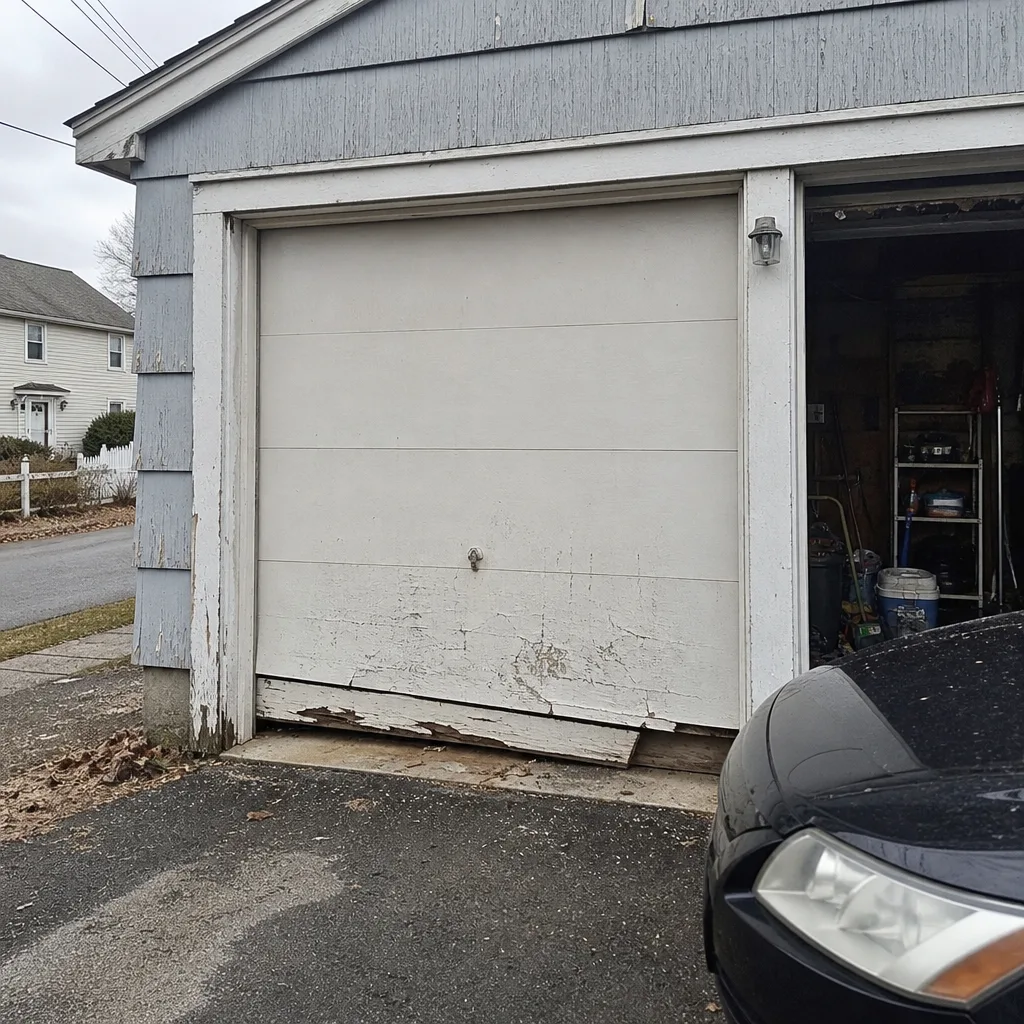 Before
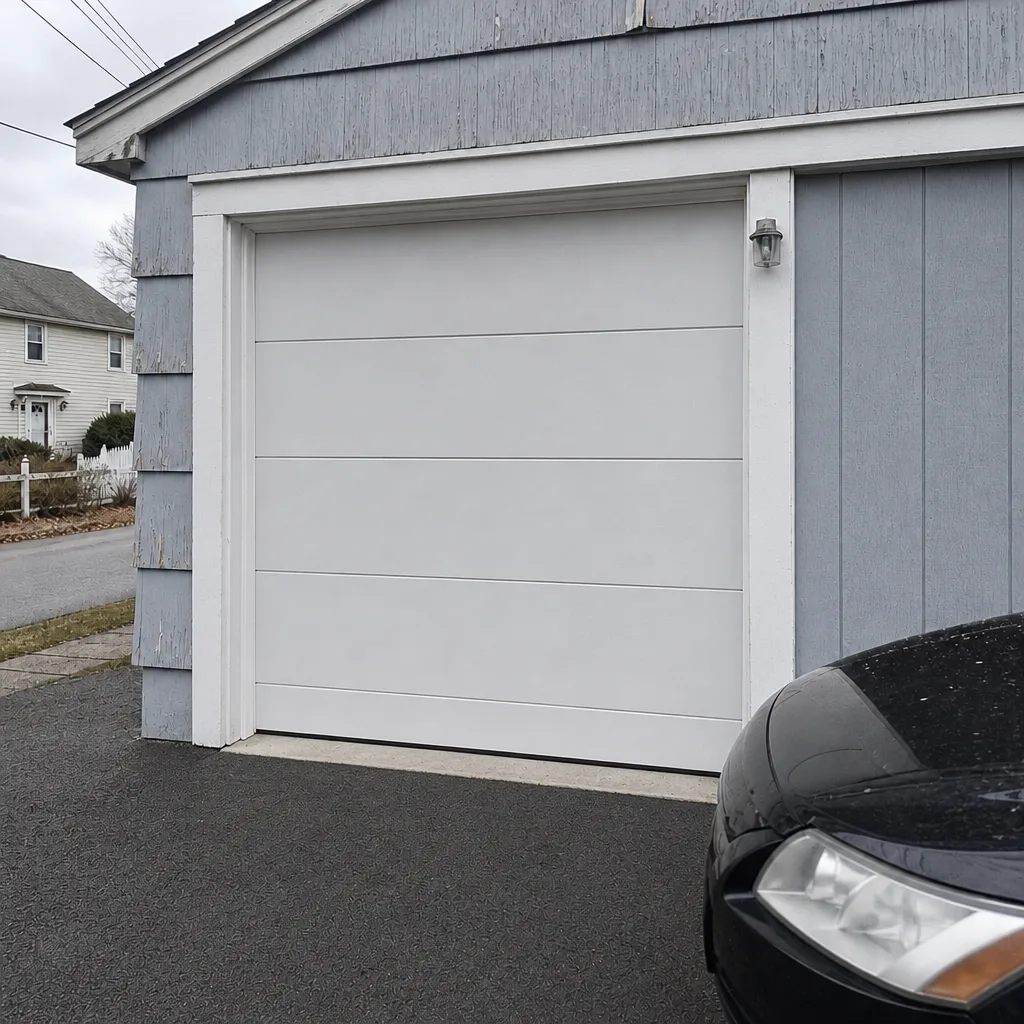 After
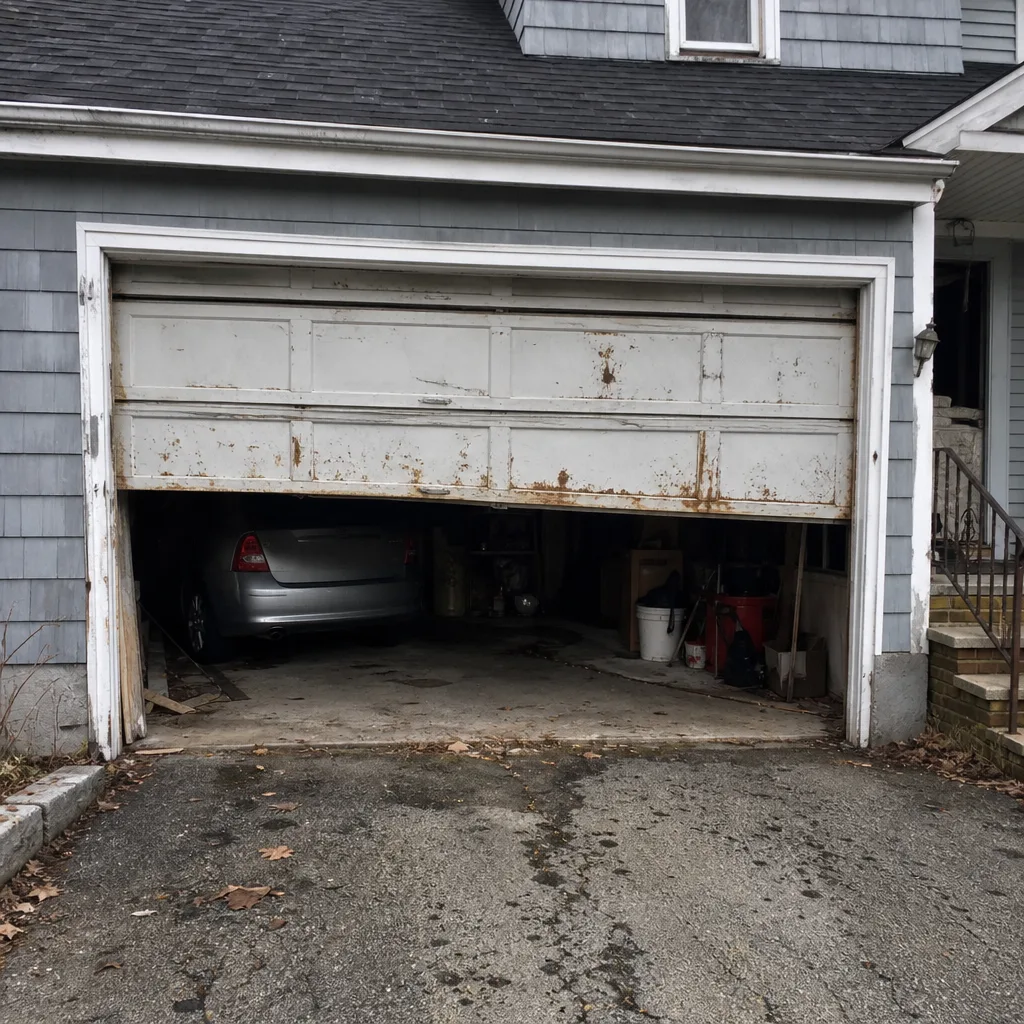 Before
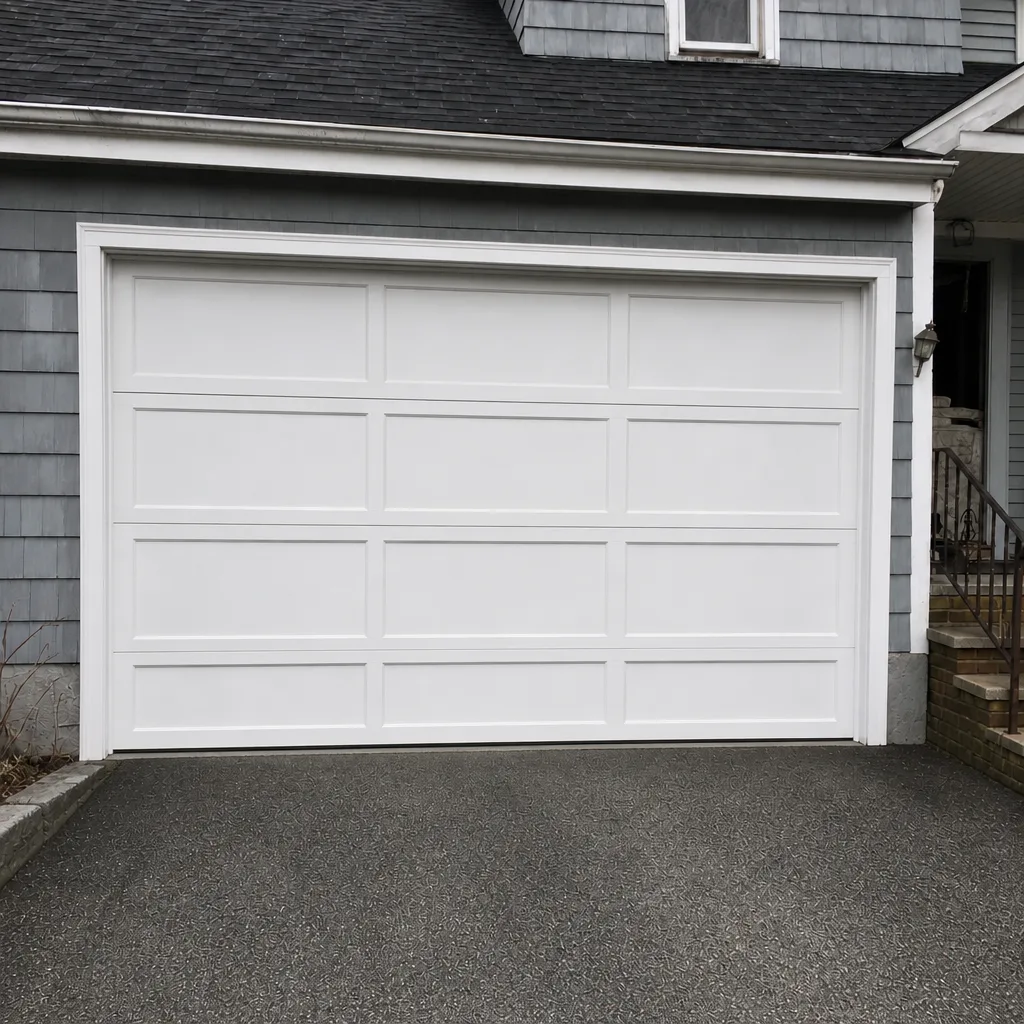 After
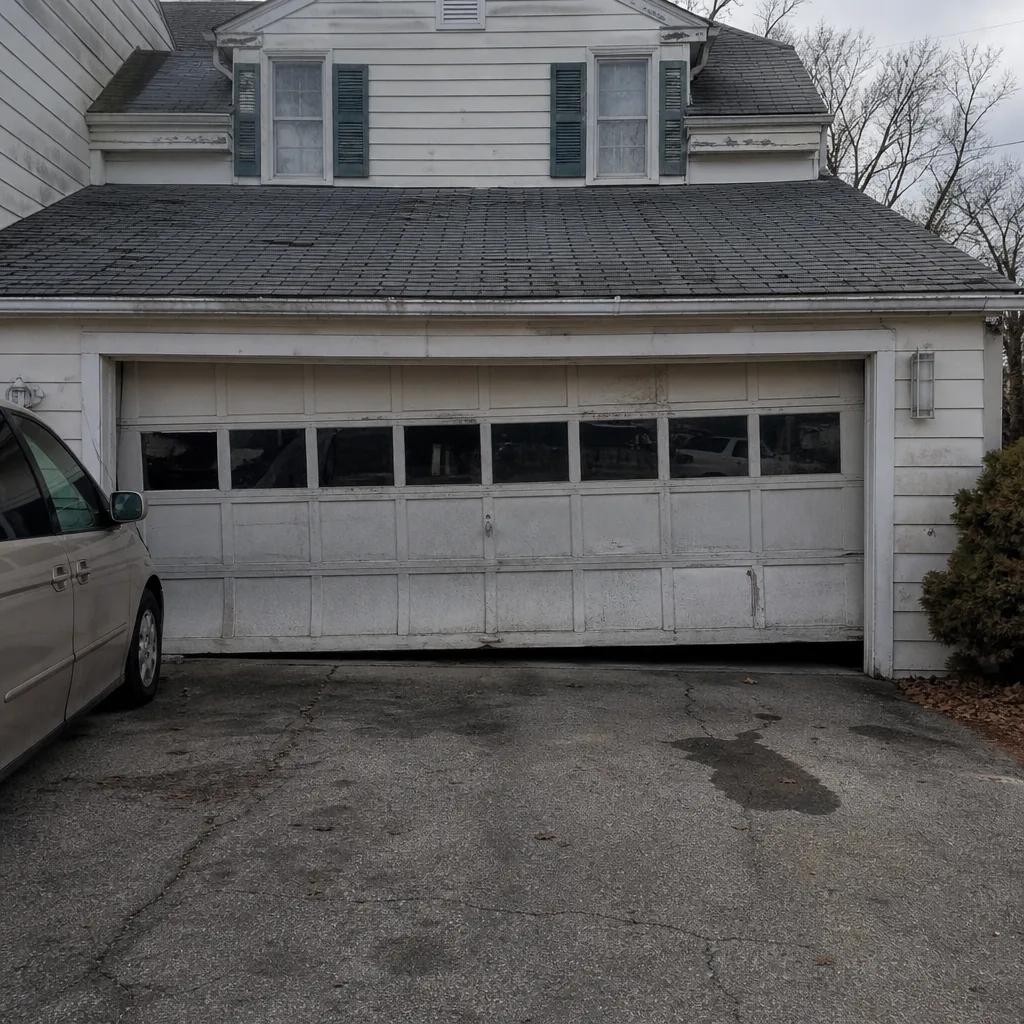 Before
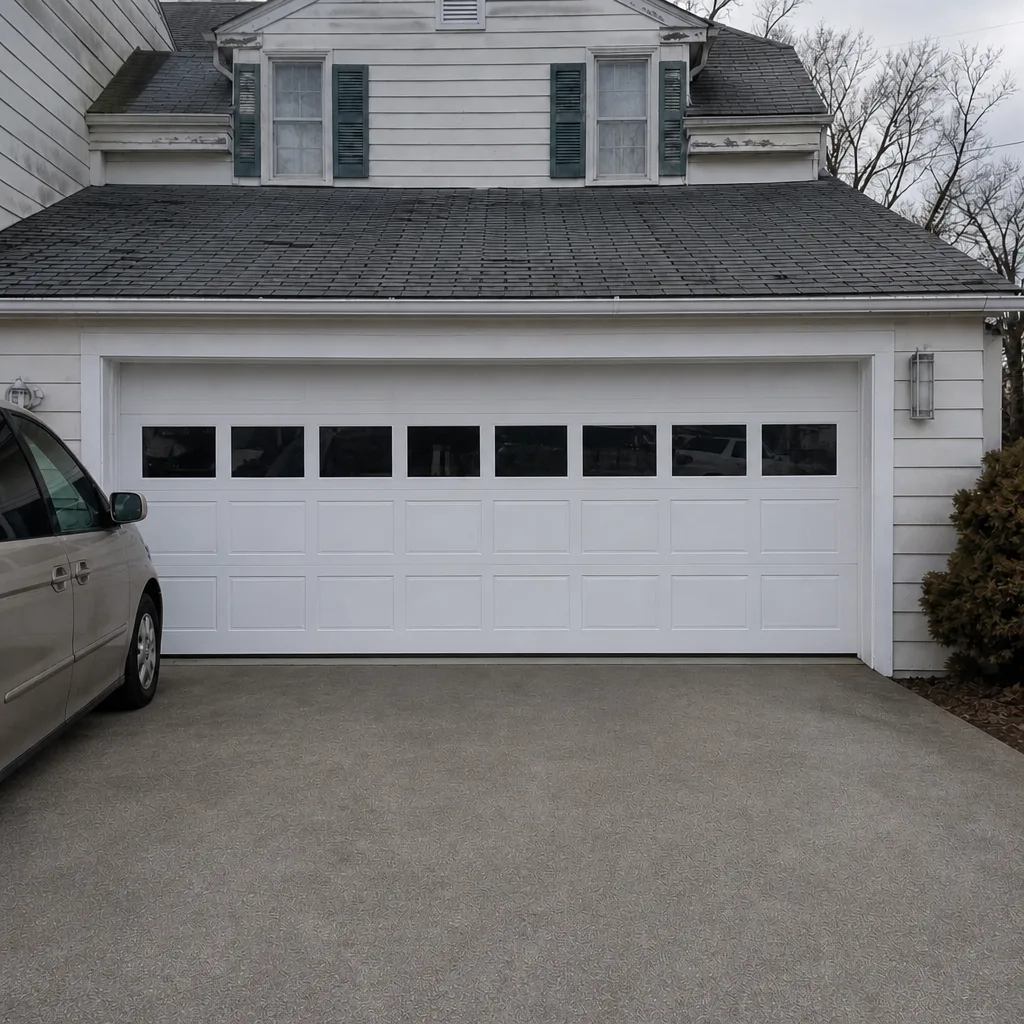 After
When to Call a Professional
Call a professional when the task involves springs, cables, bottom brackets, track realignment, door panels, or electrical work on the opener. Call when the door is off-level, grinding, or reverses without obstruction. Call when you see a broken spring, a slack cable, or the door hanging from one side. Call when a repair might require a permit or is structural. And call when you’re not sure – a free estimate costs you nothing and removes the guesswork. Lynn Garage Door Repair Pros offers free estimates in Lynn – call (844) 542-3157. We answer 24/7. Fast dispatch from 7am to 7pm, Sunday through Friday. The price is quoted and agreed before any work starts, and the written estimate is what you pay.
Frequently Asked Questions
No – torsion and extension springs should be replaced by a trained technician, not a homeowner. The spring system stores enough energy to break a wrist or worse, and the winding bars and technique required aren’t part of any standard toolkit. A misstep can also void your door’s warranty. If you suspect a broken spring, call (844) 542-3157 for a free estimate. We answer 24/7. Fast dispatch from 7am to 7pm, Sunday through Friday.
Typical garage door repairs in Lynn fall in a broad range because the job depends on the part and the door type, so the written estimate is what sets the price. Spring repair starts at a range set per spring, and a matched pair generally runs about twice that. Call (844) 542-3157 for an exact quote – estimates are free.
Yes – same-day service is available on most repair calls, and we dispatch Sunday through Friday, 7am to 7pm. We answer 24/7. A call outside dispatch hours is booked into the next opening, Sunday through Friday, 7am to 7pm. Call (844) 542-3157.
No – the written estimate is the price. We inspect the door, quote the work, and agree the price with you before any repair starts. If the inspection reveals something unexpected, we stop and re-quote rather than proceed. Call (844) 542-3157 to book a free estimate.
The local professionals we connect you with are licensed and insured as their state requires for garage door work. We work on the eight major brands you’re likely to have – LiftMaster, Chamberlain, Genie, Clopay, Amarr, Wayne Dalton, Craftsman, and Raynor – so the technician arrives knowing your hardware. Call (844) 542-3157 to confirm coverage for your specific job.
Permit rules vary by job scope, so ask the City of Lynn building department directly before scheduling a full door replacement or any structural work. In general, a like-for-like panel or spring repair doesn’t require a permit, but a full door replacement or reframing the opening usually does. Call (844) 542-3157 and we’ll walk you through the scope so you can ask the city the right questions.
The Bottom Line
The DIY-vs-pro decision on a garage door isn’t about whether you’re handy – it’s about which tasks carry injury risk, which require a permit or a licensed contractor, and which are genuinely within reach for a prepared homeowner. Do the safe work yourself: lubricate, clean, align the sensors, replace the bottom seal, and test the safety reverse monthly. Call a professional for anything involving springs, cables, tracks, panels, opener wiring, or structural work. In Lynn, a single professional inspection a year keeps your DIY maintenance honest and extends the door’s life. And if a spring breaks, a door goes off-level, or you’re simply not sure – a free estimate from Lynn Garage Door Repair Pros is the fastest way to get a straight answer. Call (844) 542-3157 for a free estimate. We answer 24/7. Fast dispatch from 7am to 7pm, Sunday through Friday. Every price is quoted and agreed before any work starts.
Written by the team at Lynn Garage Door Repair Pros.